Our Location
304 North Cardinal St.
Dorchester Center, MA 02124

The beginning was not about building a brand or starting a business.
It was much simpler — a long-standing attraction to beautiful objects.
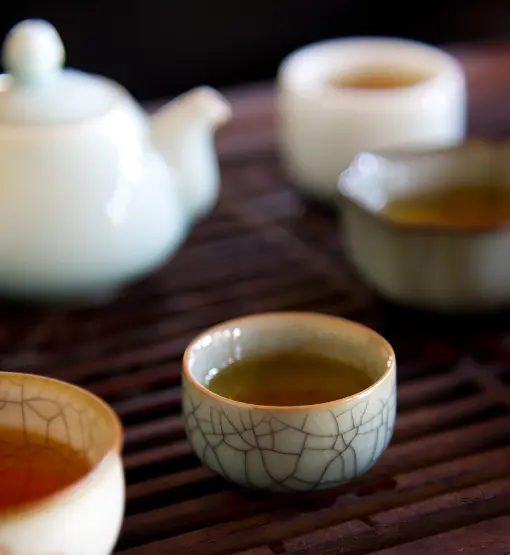
Tea cups that feel balanced in the hand. Bowls with uneven rims that slow down a moment. Glazes that shift quietly with light. Pieces that carry both function and a sense of stillness.
That curiosity eventually led to Jingdezhen.
Often referred to as the “porcelain capital,” Jingdezhen is better understood through experience than description. Ceramics there are not treated as rare objects or distant heritage — they exist as part of everyday life, shaped continuously by generations of makers.
The learning process began at the most fundamental level.
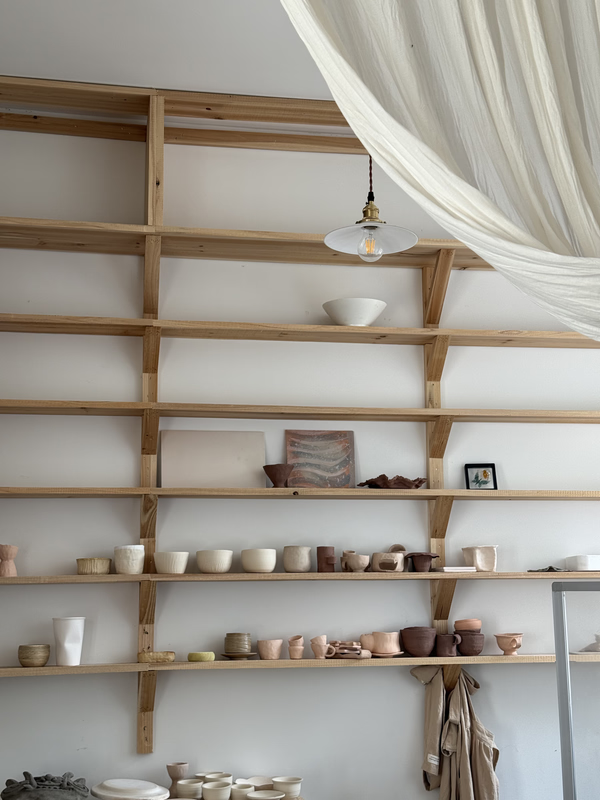
Not with finished forms, but with clay itself — how moisture changes behavior, how pressure affects structure, how easily things can collapse before taking shape.
Hand building came first.
Pinching. Coiling. Learning form slowly through repetition.
At the beginning, nothing felt refined.
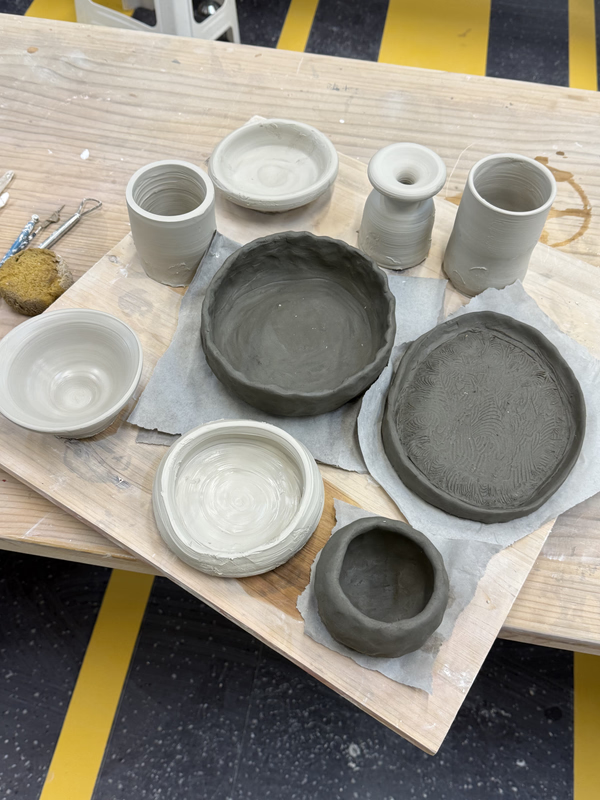
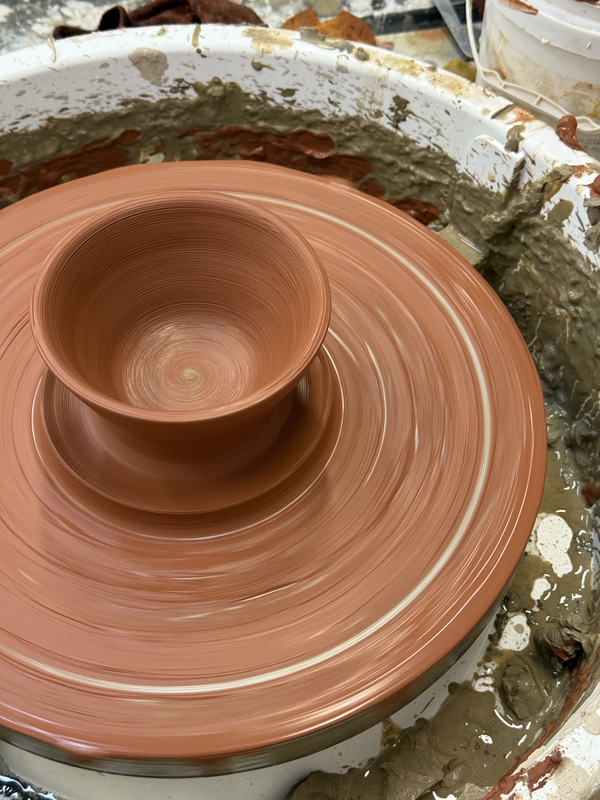
Wheel throwing came next.
Centering clay proved unexpectedly difficult. Forms leaned, collapsed, or lost structure in seconds. What appeared stable could disappear quickly.
Trimming, glazing, and firing followed.
Each stage introduced new variables, new uncertainty.
Firing, in particular, changed how outcomes were understood.
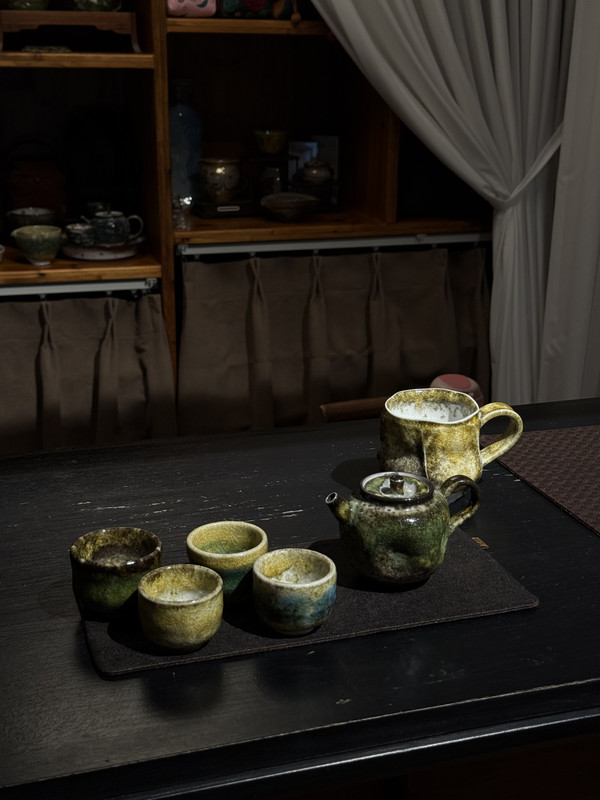
Heat transforms material beyond full control. In wood firing and soda firing, ash, flame, and temperature interact in ways that cannot be fully predicted in advance.
The final result is never entirely designed.
That unpredictability becomes part of the language of ceramics.
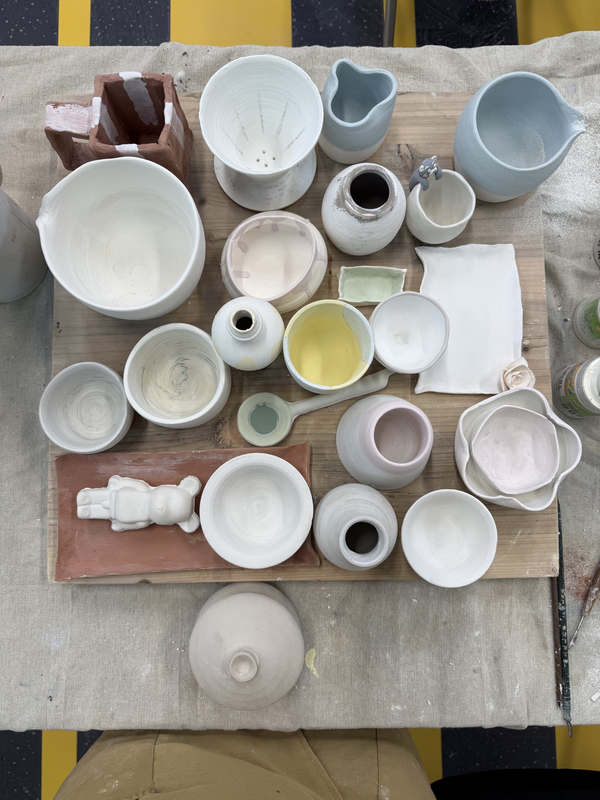
Over time, the idea of perfection begins to matter less.
Ceramics start to feel less like finished objects and more like records of process — repetition, hesitation, failure, adjustment, and time.
And a larger question gradually emerges:
Why do so many thoughtful, culturally rooted, and carefully made pieces remain largely unseen outside the places where they are created?
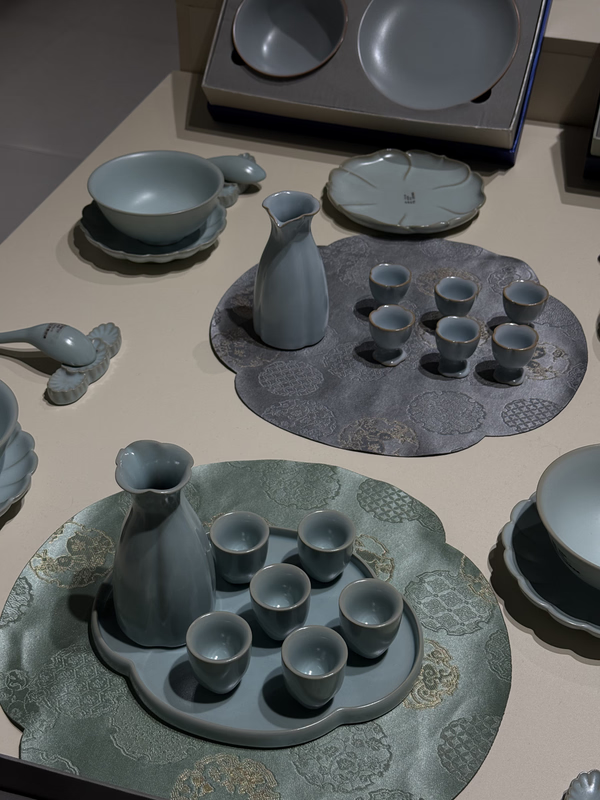
Across Jingdezhen, independent studios and makers continue to develop distinct visual languages — from restrained Ru-inspired forms, to softer Shino surfaces, to expressive wood-fired surfaces shaped by flame.
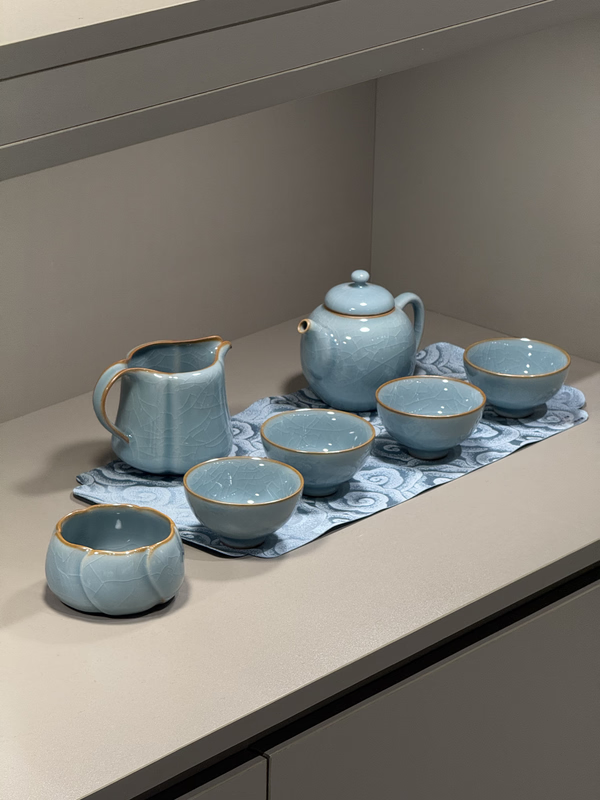
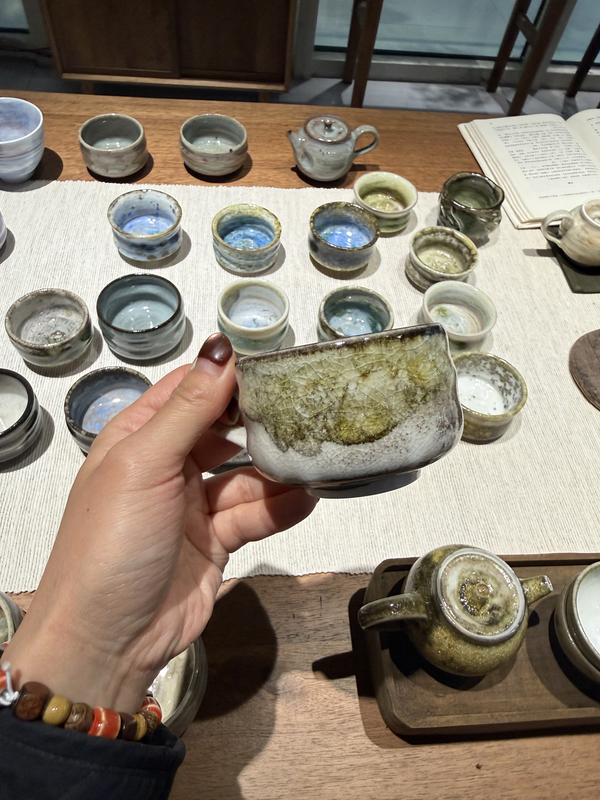
Many of these works rarely travel beyond their immediate context.
That realization becomes an ongoing thread.
What began as personal curiosity slowly shifts into something more collective:
A desire to help these works, processes, and traditions move beyond Jingdezhen.
Not only through objects themselves, but through everyday rituals — tea, coffee, shared spaces, and small moments of attention.
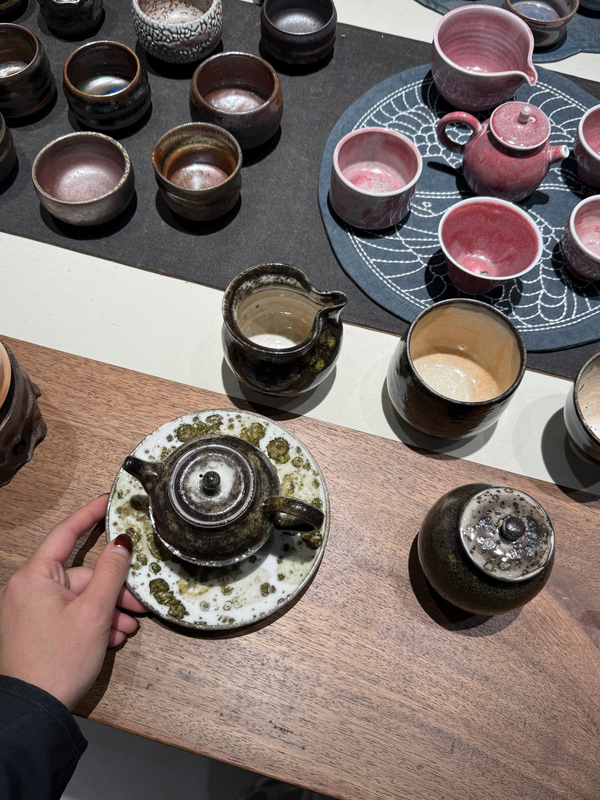
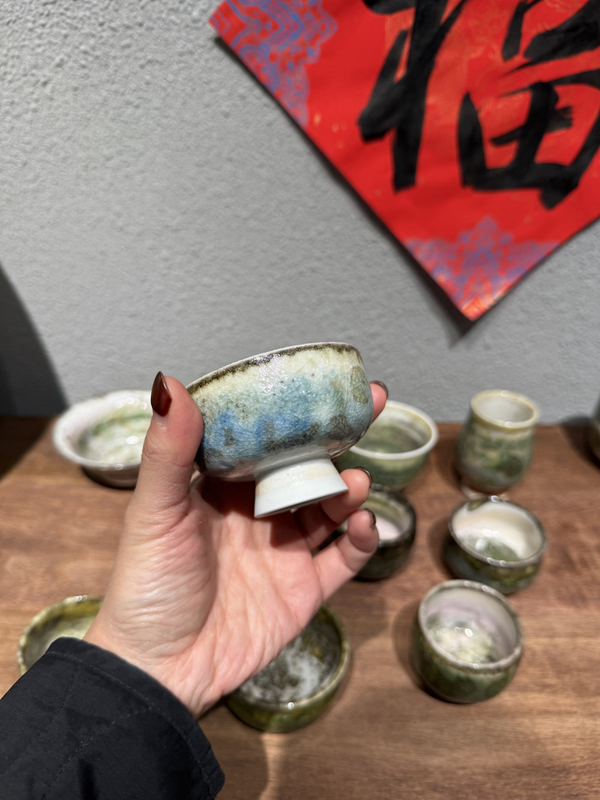
Tide Atelier grows from that idea.
It is not defined as a commercial platform alone, but as a space for craftsmanship, culture, and daily rituals to circulate a little further.
And it remains an ongoing learning process — through each piece, each firing, each conversation.